Project: Open-Source UCIe Die-to-Die Channel Modeling Tool
Event: University of Toronto - ECE496 Capstone Project
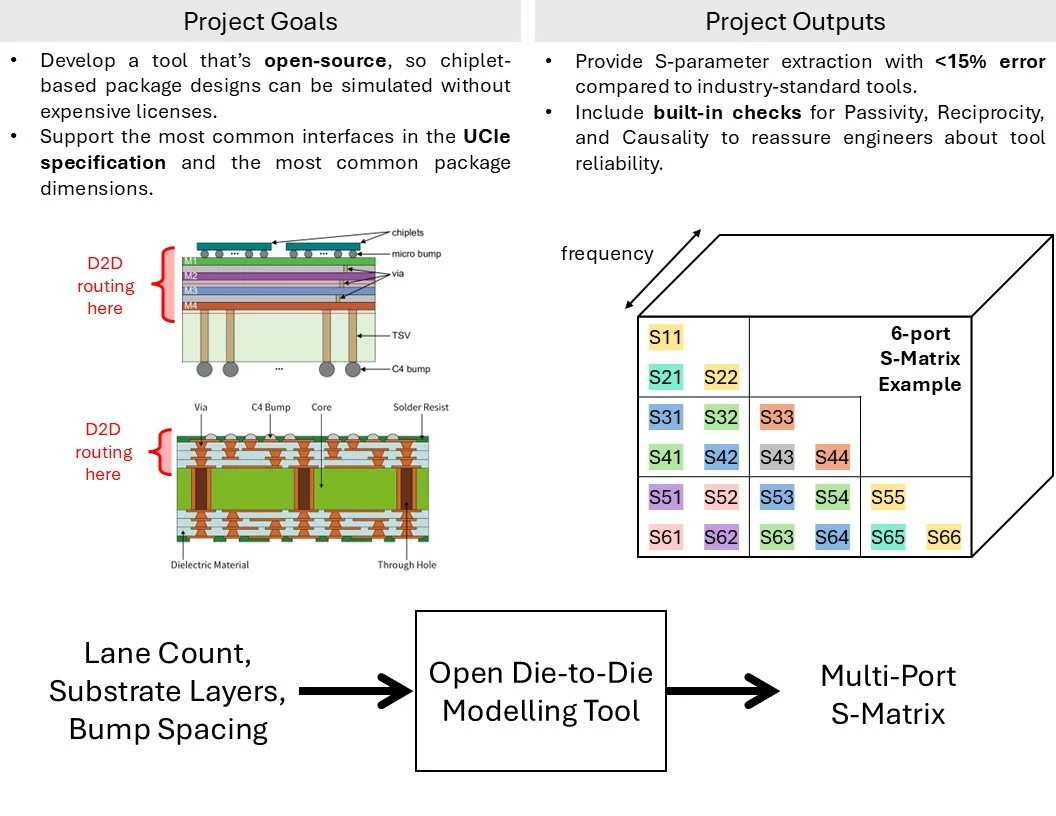
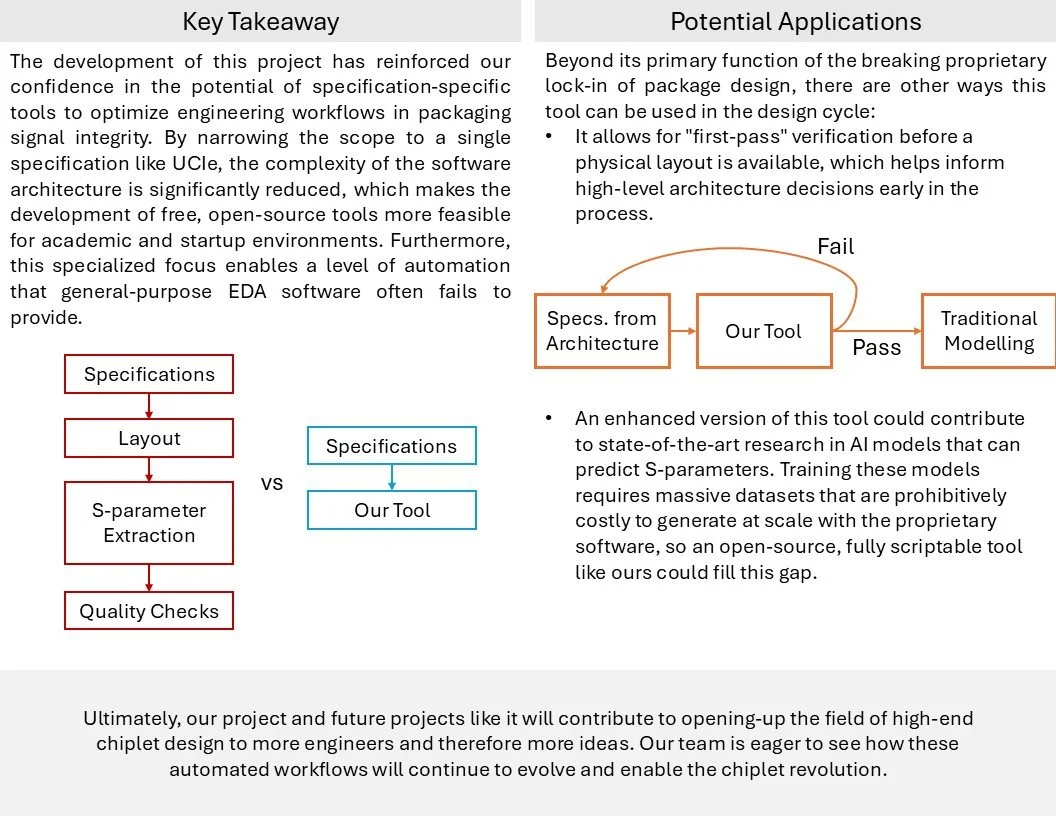
Result: Developed a validated, open-source Python framework for multi-port S-parameter extraction
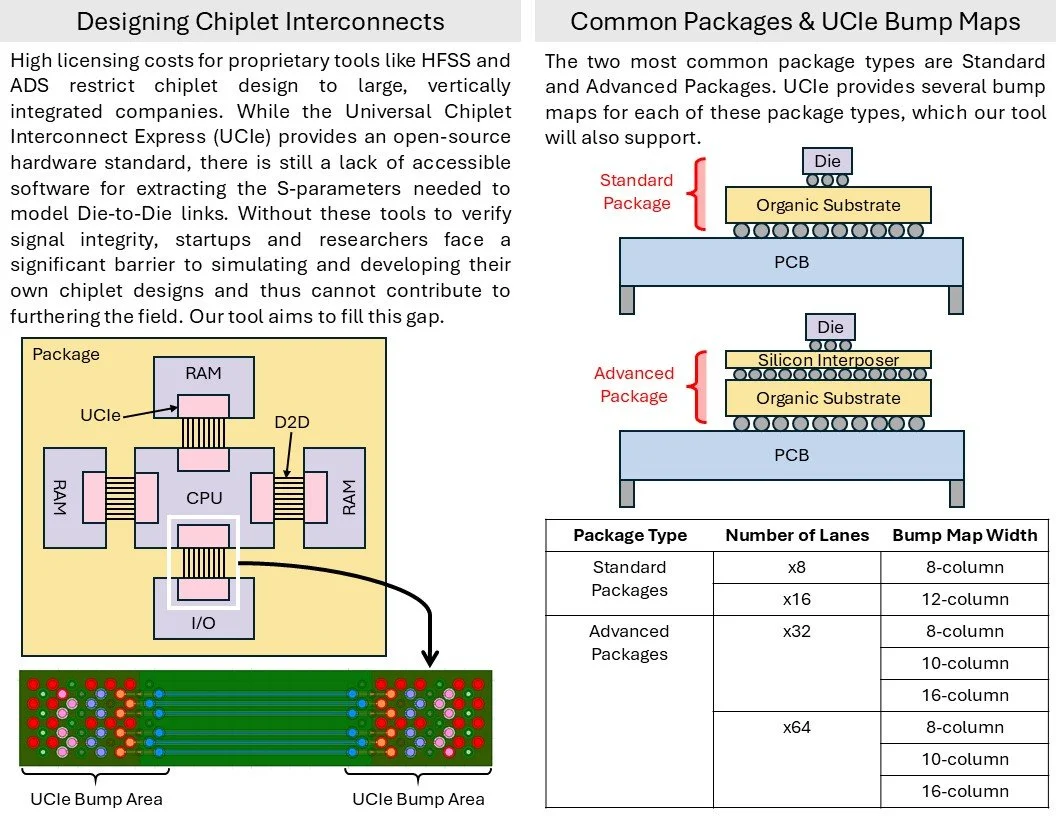
Objective: To democratize access to high-fidelity chiplet simulation by building a free, open-source tool that extracts multi-port S-parameters for Universal Chiplet Interconnect Express (UCIe) Die-to-Die links without relying on expensive, proprietary Electronic Design Automation (EDA) suites like Ansys HFSS.
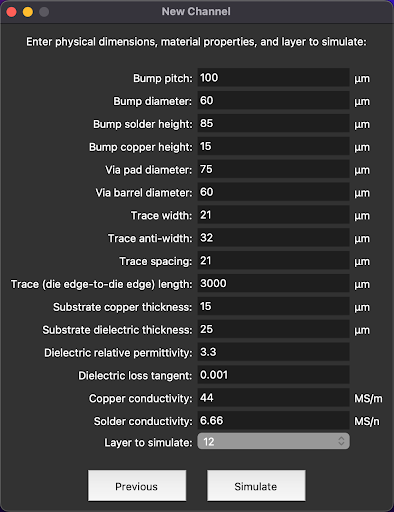
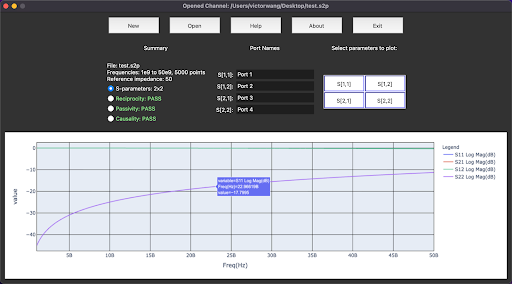
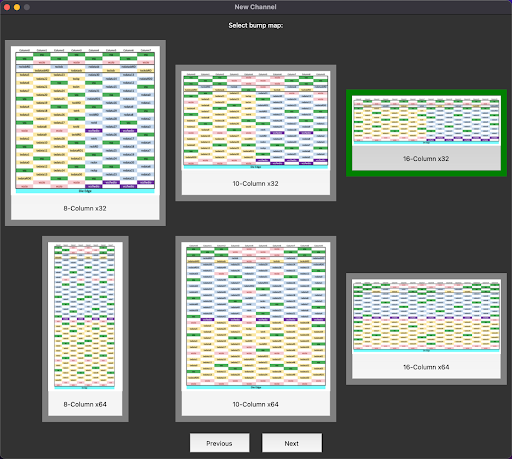
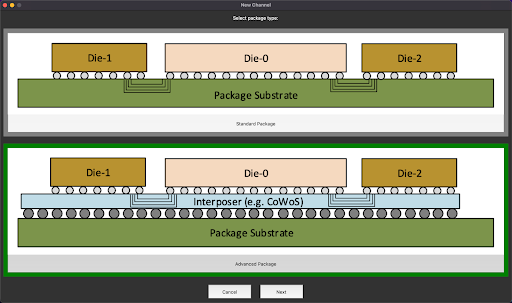
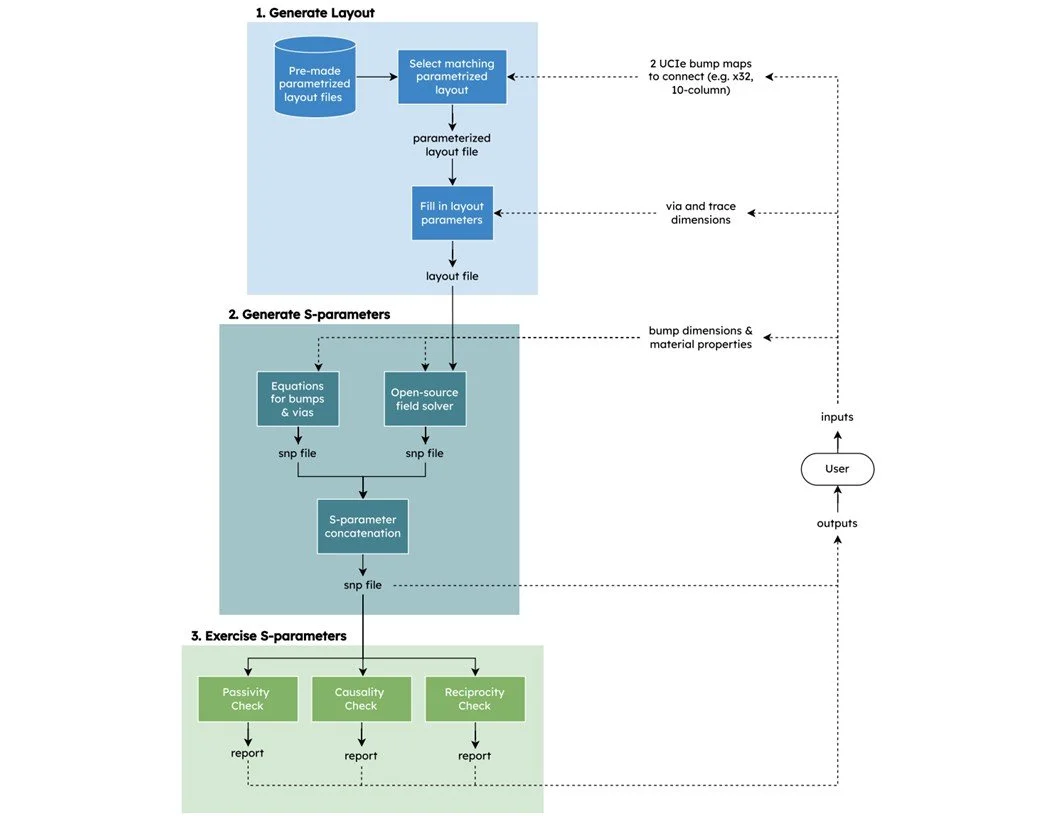
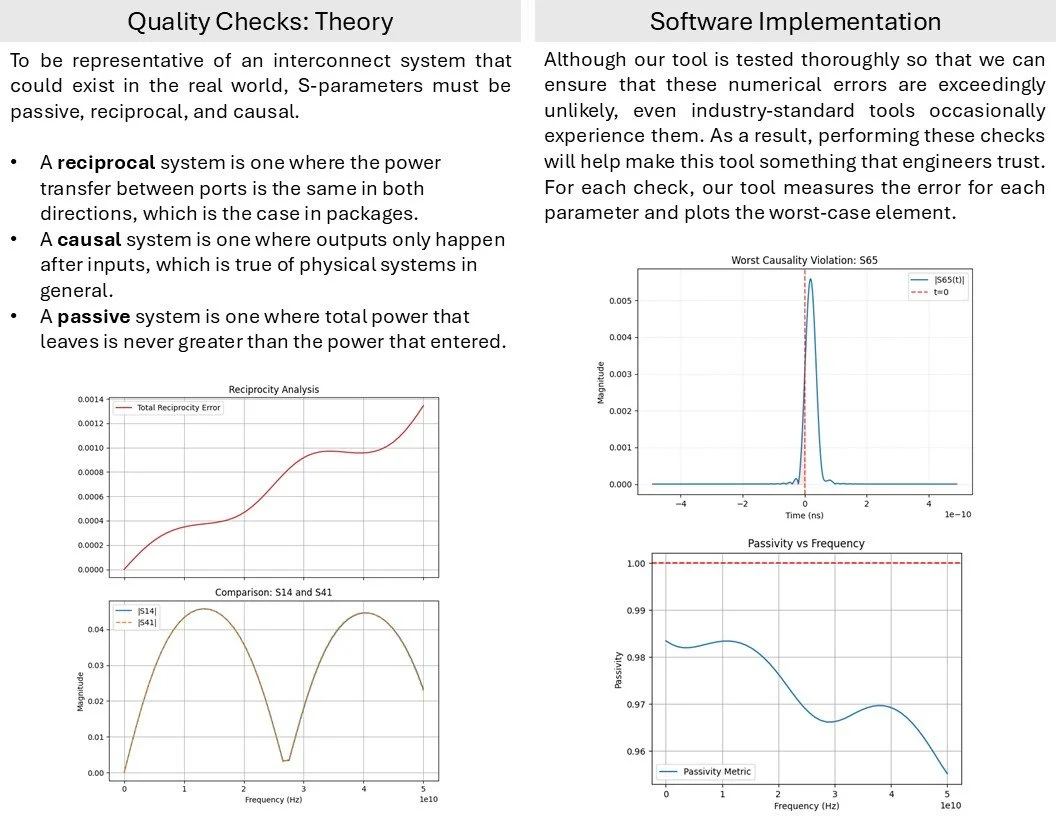
Project Description: We developed a fully functional Python-based software tool that automates the industry-standard workflow for Die-to-Die interconnect modeling. The tool generates layouts based on standard UCIe bump maps, extracts the S-parameters, and automatically exercises the generated models to verify passivity, causality, and reciprocity.
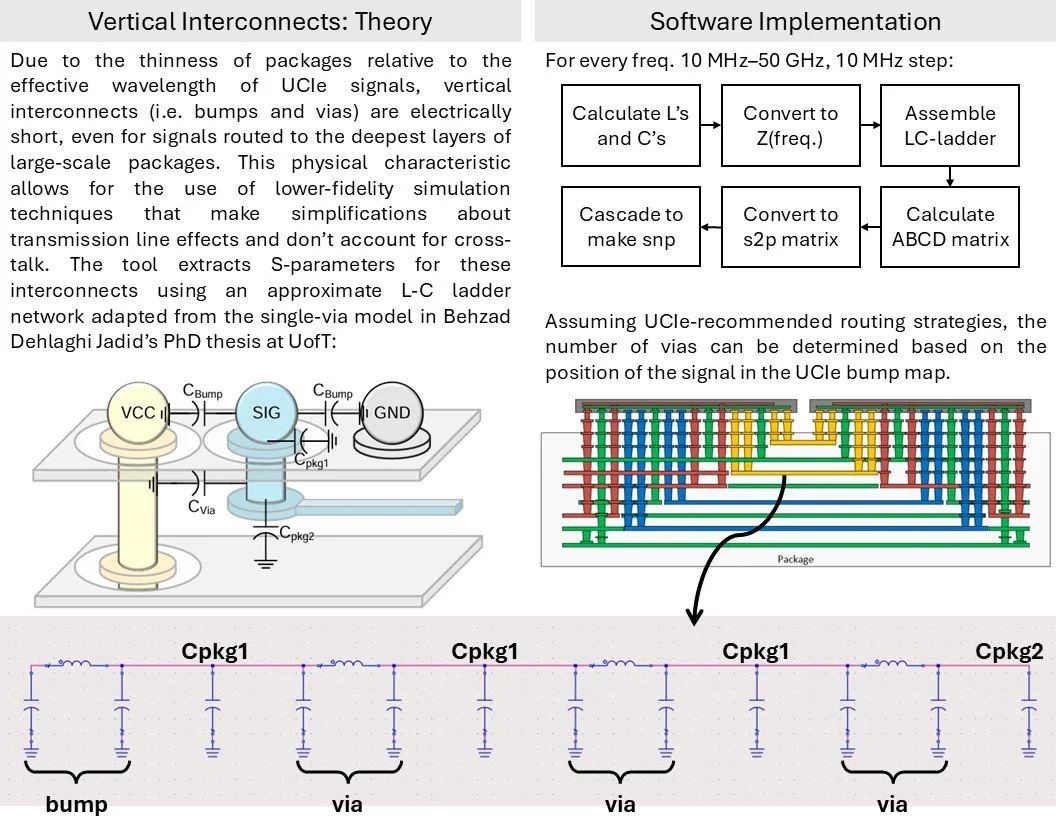
Vertical Interconnects: Electrically short structures, such as bumps and vias, were modeled using an approximate L-C ladder network adapted from UofT research.
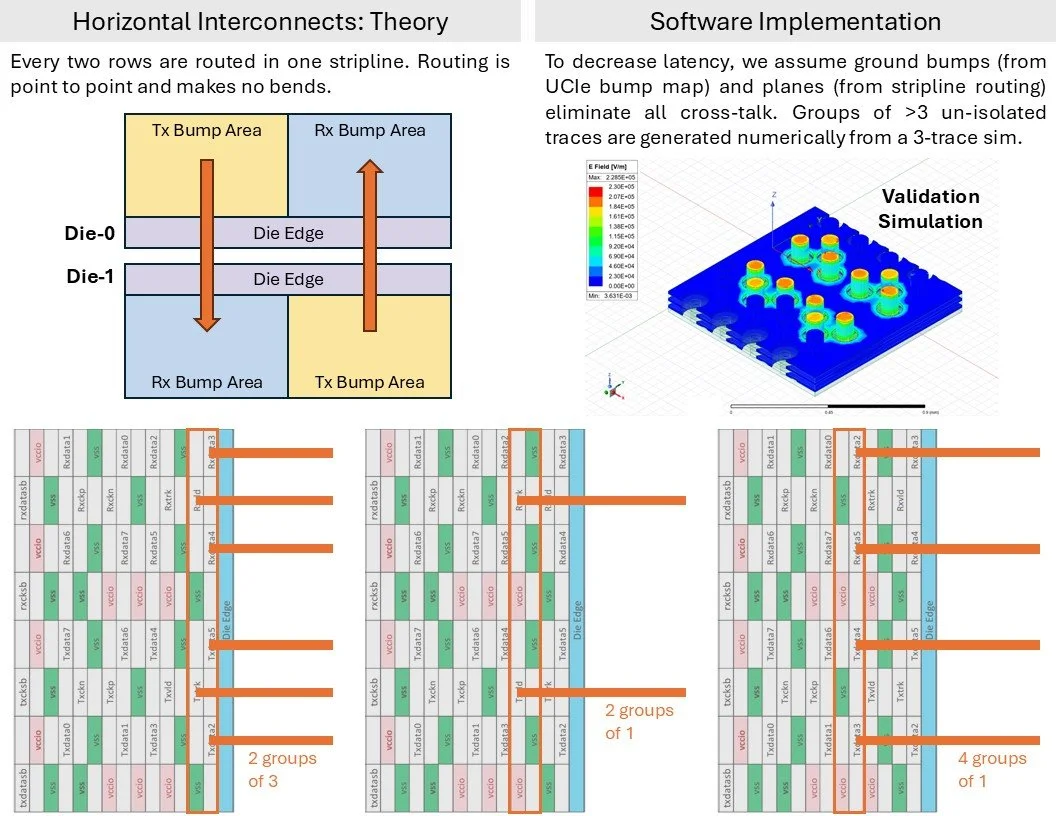
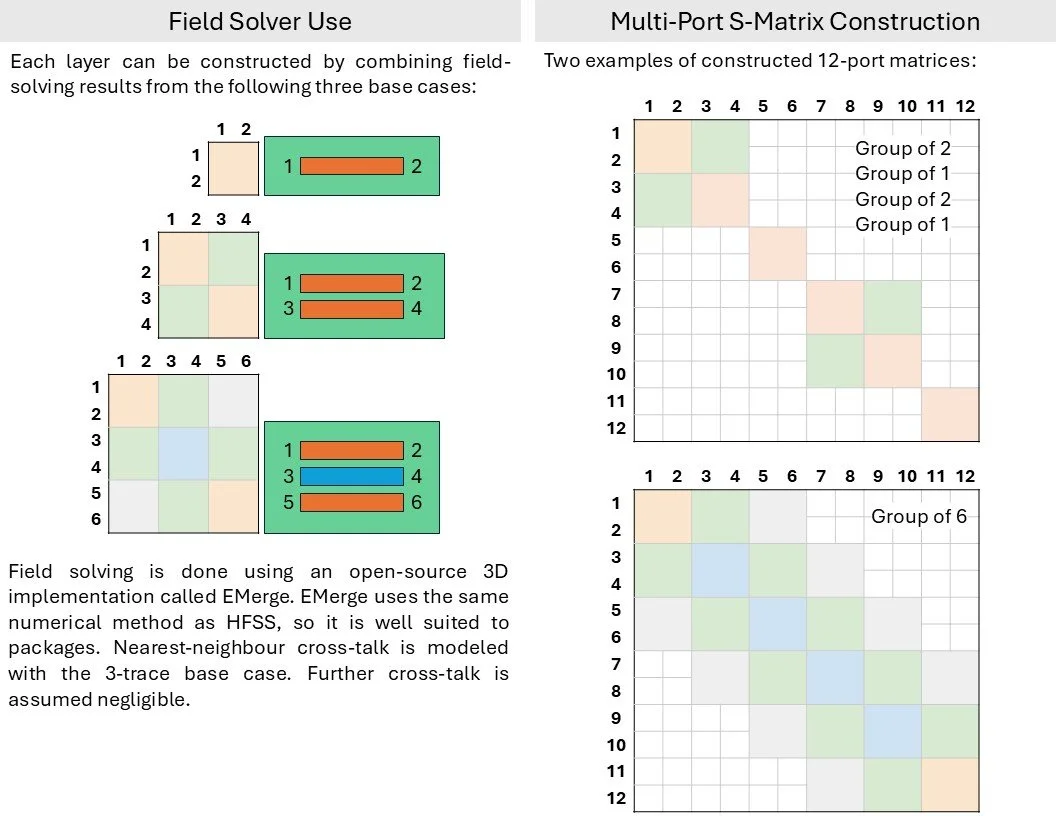
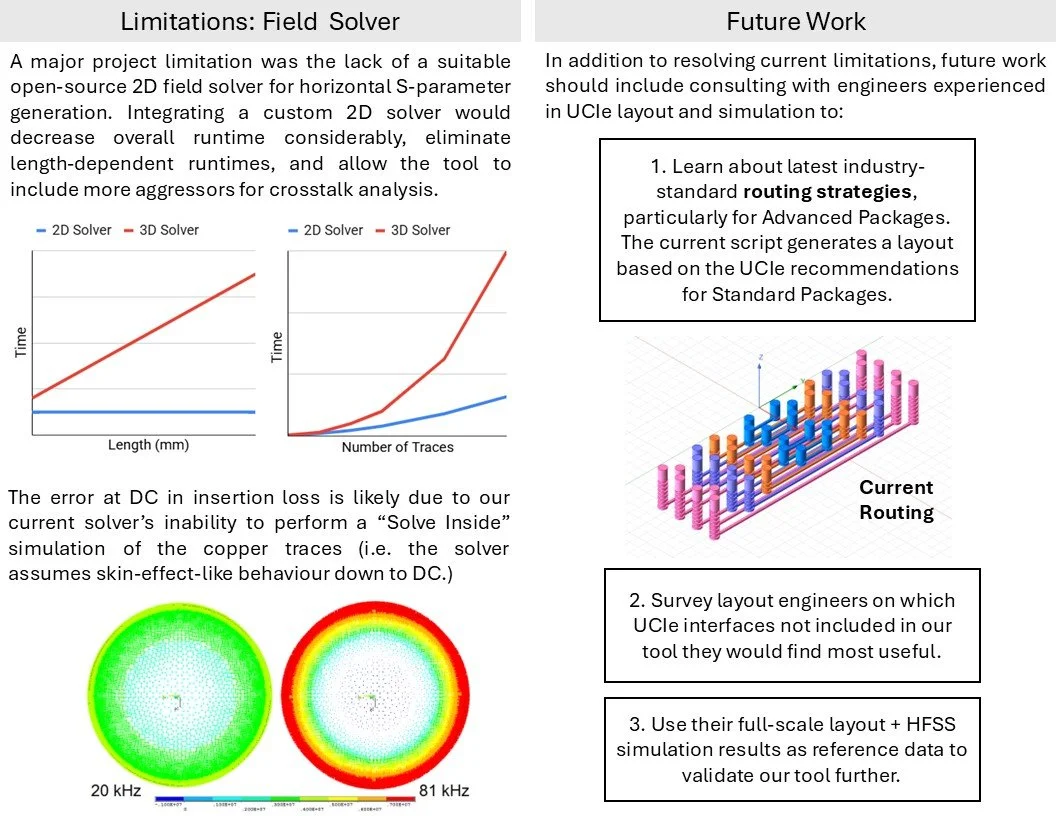
Horizontal Interconnects: For the electrically long horizontal traces, we integrated an open-source 3D field solver called EMerge and managed the dynamic mesh generation based on trace size and edge locations.
Simulation Optimization: To mitigate the computational bottleneck of 3D EM field solvers, I utilized planes of electromagnetic isolation. By leveraging the shielding properties of stripline ground planes and UCIe ground bumps, the tool decomposes massive interconnect layouts into smaller, independent simulation groups.
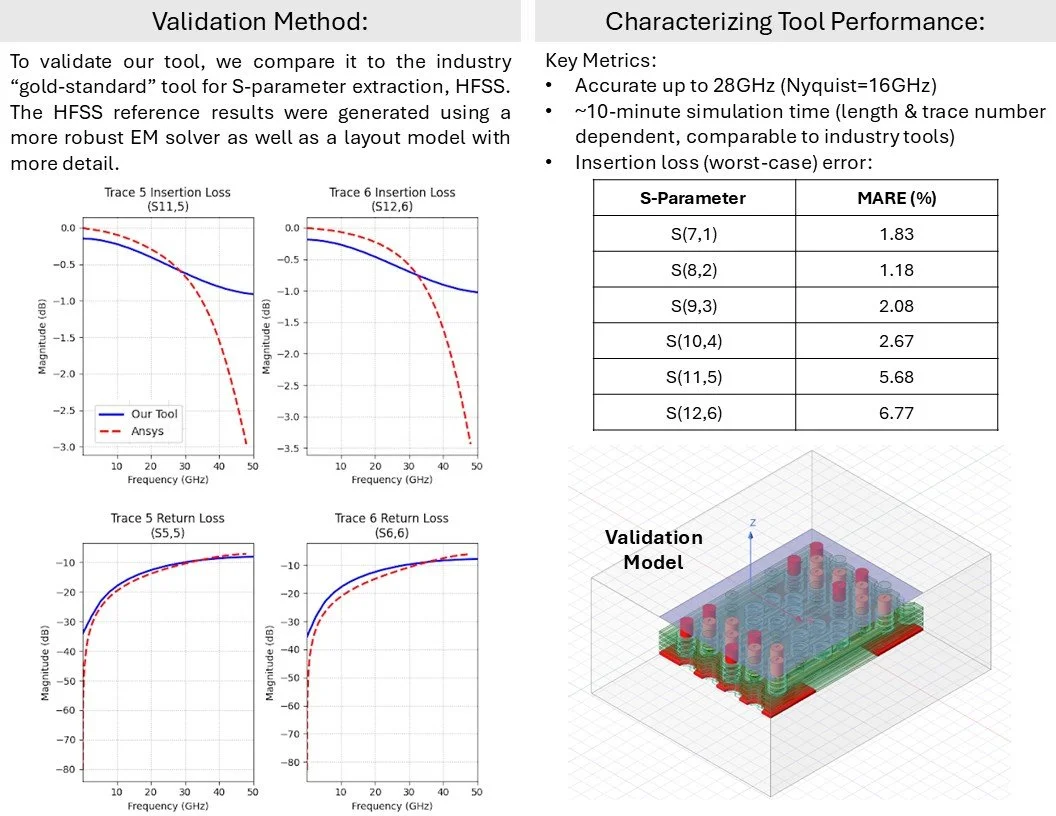
Outcome: The framework was validated against the industry-standard Ansys HFSS. The tool achieved a Mean Absolute Relative Error (MARE) of under 3% for insertion loss parameters and maintained accuracy up to 28 GHz. Completing simulations in approximately 10 minutes, the software successfully provides a scalable, accessible alternative for "first-pass" chiplet verification.
The complete Python codebase, including the vertical L-C ladder implementation and the dynamic 3D meshing algorithms, is fully open-source. You can review the repository, examine the verification reports, and test the extraction tool yourself via the following GitHub link: Open-Die2Die-Modelling
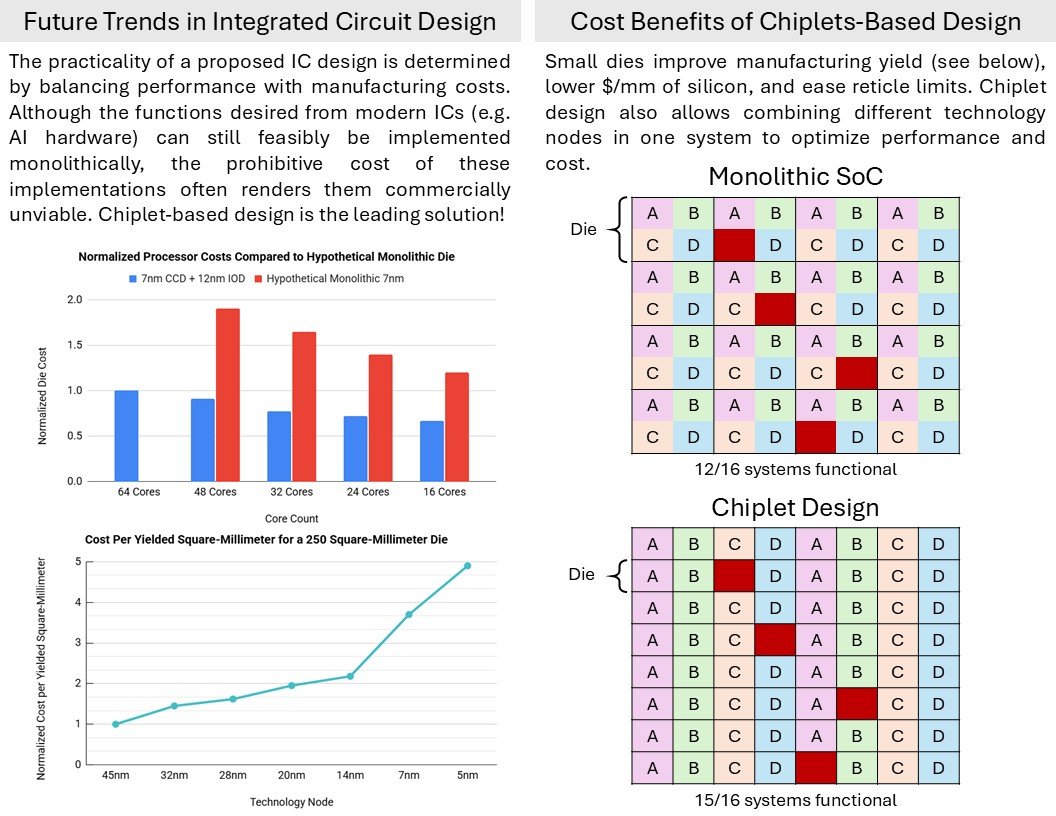
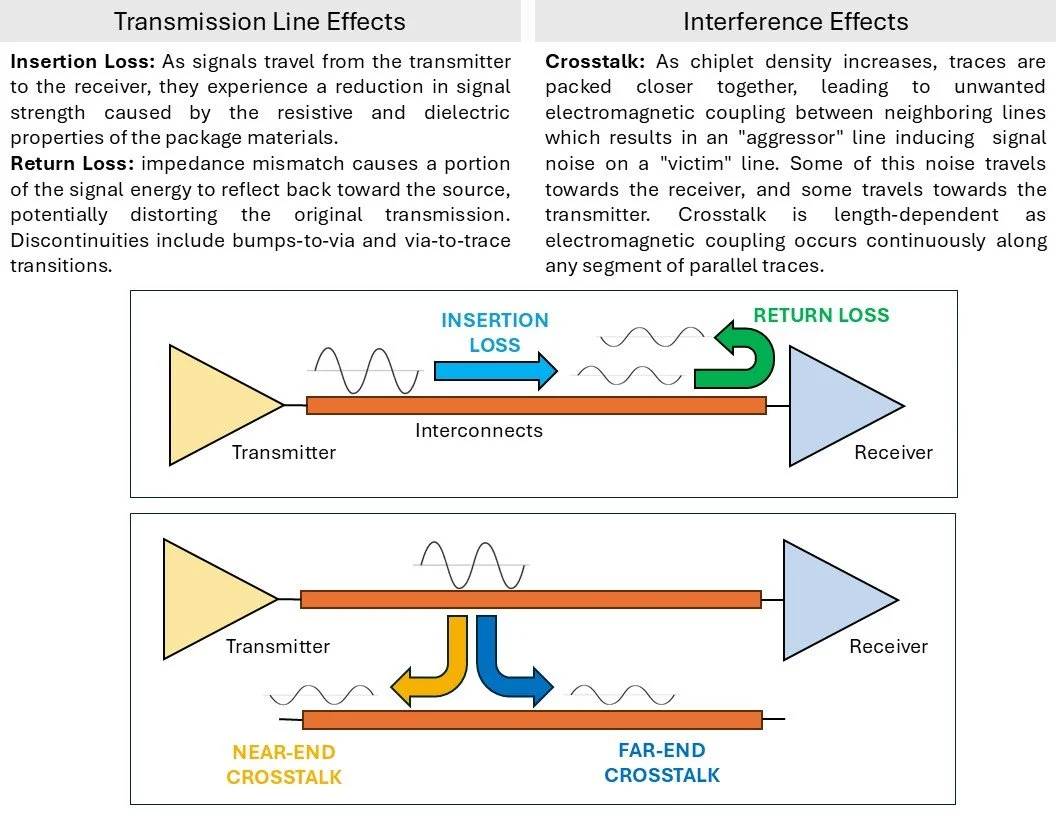
Below, you will find our final ECE496 Capstone presentation poster, formatted sequentially for readability. It provides a comprehensive visual breakdown of the tool's architecture, our electromagnetic isolation methodologies, and the full HFSS validation data.