Project: RF Power Amplification Stage for Software-Defined Radio (SDR)
Event: University of Toronto ECE295
Result: successful simulation, PCB fabrication, and automated hardware validation
Objective: To design, simulate, and physically construct a high-efficiency RF power amplification stage tailored for the transmission cycle of a Software-Defined Radio.
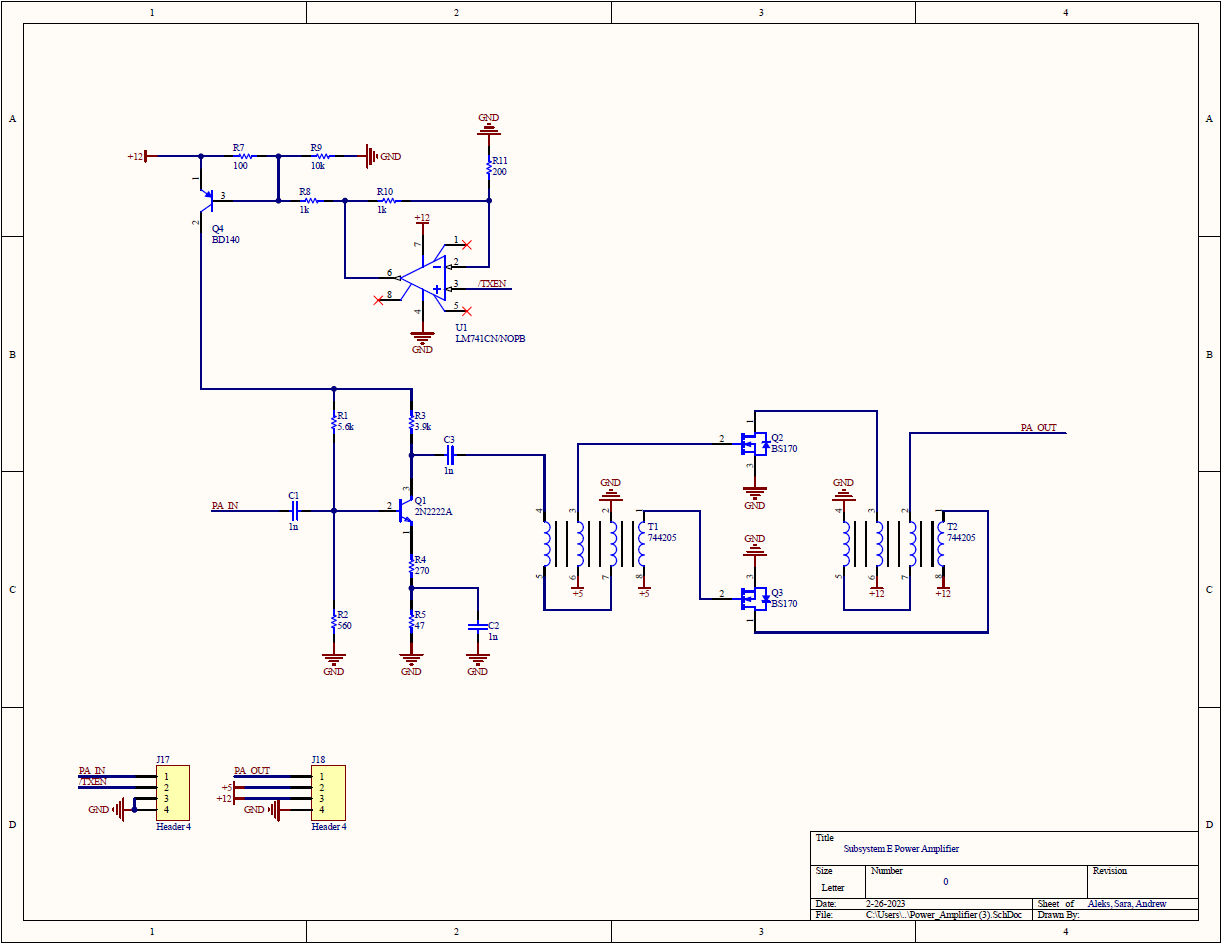
Project Description: The core architecture consisted of a common-source voltage amplifier cascading into a Class-AB push-pull power amplifier utilizing twin n-channel MOSFETs. To optimize system-level power consumption, an active-low switching mechanism was integrated, ensuring the board draws power exclusively during active transmission and conserves energy during receive mode.
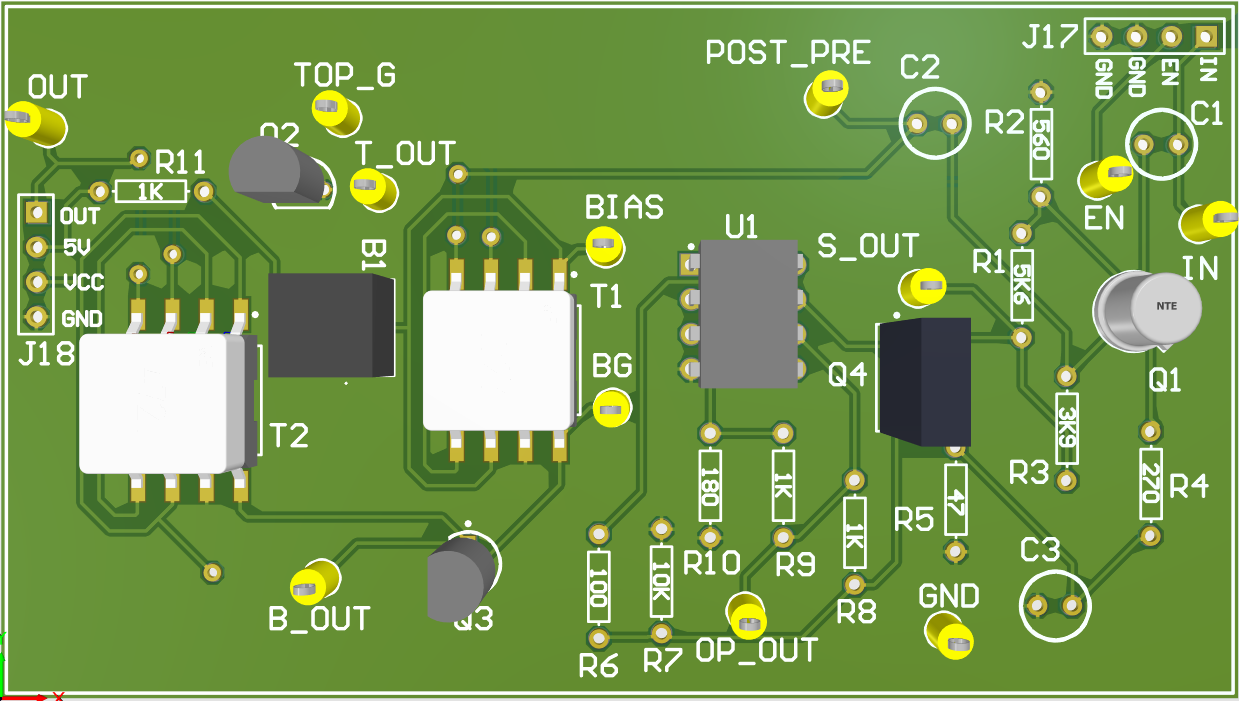
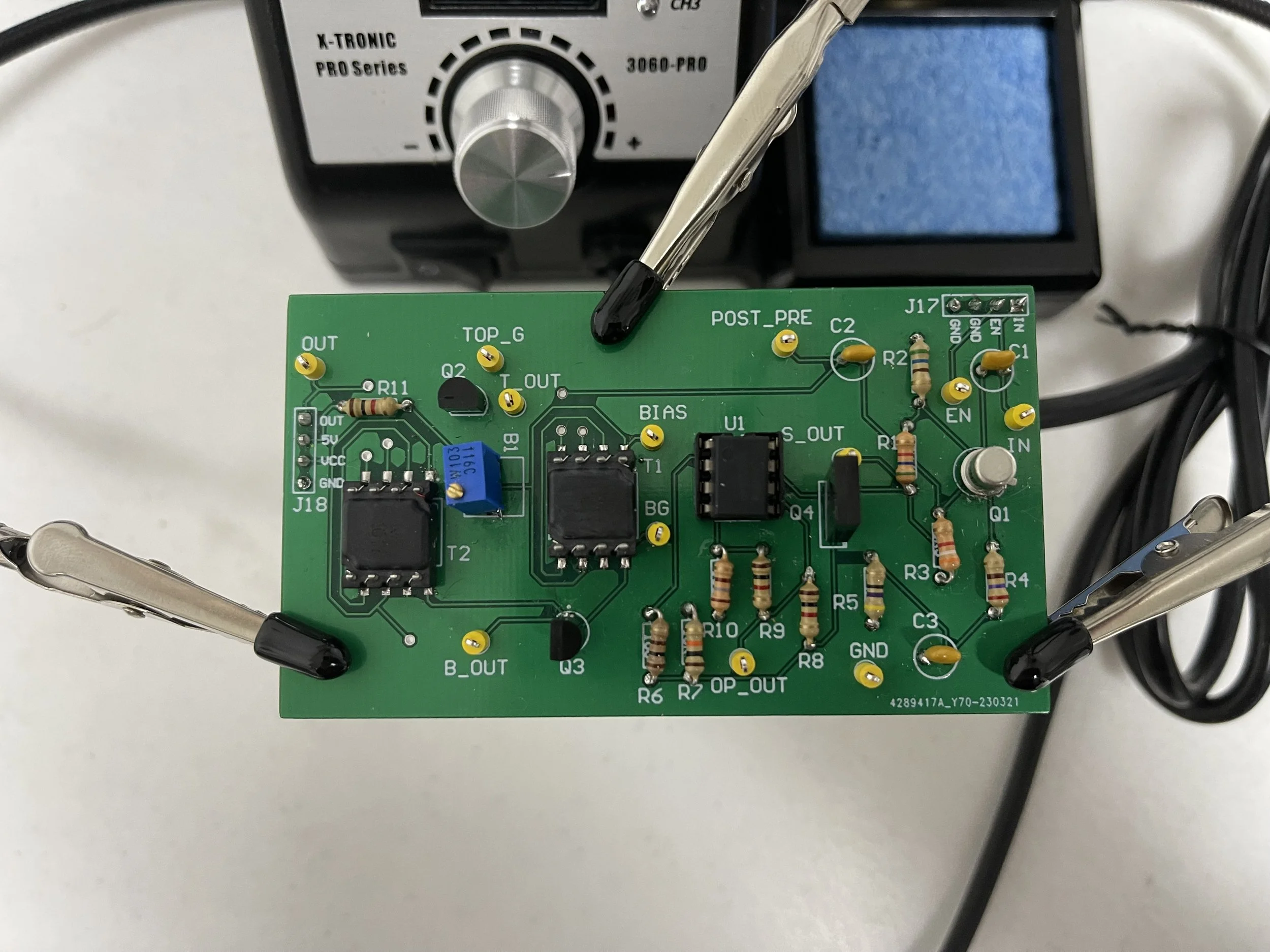
PCB Layout & Fabrication: Initial circuit topologies were modeled and simulated in Multisim to verify theoretical parameters, followed by physical breadboarding for real-world feedback. After sourcing RF-compatible components rated for the projected current demands, the circuit was routed into a manufacturable Printed Circuit Board (PCB) using Altium Designer and assembled via hand-soldering.
Automated Hardware Testing: System performance was evaluated using an oscilloscope, digital multimeter, and function generator. To ensure comprehensive and repeatable analysis, custom Python scripts were developed to interface directly with the test equipment, automating the signal generation and data acquisition processes.
Power Amplifier for Software Defined Radios at UofT